A stablecoin is a crypto-asset that attempts to maintain a stable value relative to a currency, such as the euro or the dollar, or to another reference. This does not mean it is bank money nor that it can always be exchanged for a real euro under any circumstances.
How is the price maintained?
Some issuers claim to hold financial reserves and recognise a right of reimbursement under certain conditions. Other systems depend on market mechanisms, crypto-asset guarantees, or algorithms. The sources of stability and the risks are very different: it makes no sense to treat all stablecoins as a single product.
If people believe that one unit can be exchanged for one euro, they tend to accept a price close to one euro. However, this confidence depends on the quality and liquidity of the reserves, the legal rights of the holders, and access to the reimbursement process.
Example: a parity that breaks
Imagine that you have 500 tokens that usually trade at €1. Your balance is shown as €500. If, during a loss of confidence crisis, the market price falls to €0.92, an immediate sale would give you €460 before fees. The loss would be €40, or 8%. This is a hypothetical example, not the trading price of any real stablecoin.
Even if the issuer maintains a right of reimbursement, the access requirements, time limits, and counterparty risk may differ from those of a traditional bank deposit.
Why isn’t it the same as having money in the bank?
An eligible deposit at a Spanish entity adhering to the Deposit Guarantee Fund can benefit from coverage within the limits and conditions of the system. A stablecoin does not automatically convert into a guaranteed deposit simply because it is used in a financial application.
It is also not the same as keeping euros in a current account as having tokens held in custody by a platform. In the latter case, custody risks, credential theft, transfer freezes, or platform failure may arise.
What changes in the European Union?
MiCA establishes specific categories and obligations for tokens linked to assets and electronic money tokens. ESMA reiterated in 2026 that authorised service providers must not continue to offer certain services using stablecoins that do not meet the applicable requirements.
The key idea: the term ‘stable’ describes an objective, not an absolute guarantee. What matters is who promises repayment, with what reserves and under which regulations.
The decisive question is who assumes the risk
When a user transfers euros to an entity, they may become a creditor of the bank under a deposit contract. When they purchase a stablecoin on a platform, they may have a legal relationship with the token issuer, another with the platform, and a third with whoever holds the keys. If any of these actors fails, the available options may differ.
Therefore, it is necessary to separate three questions: who issued the token, who custodies it, and in front of whom do you have a right to reimbursement? The regulation of the issuer does not eliminate all operational risks of a platform nor the technological risks of the portfolio.
A news item stating that «the stablecoin is 100 % backed» requires at least two clarifications: with which assets it is backed and with what frequency the balance is verified. The expression without auditable data says very little.
The same euro symbol, three different rights
When a digital balance displays «100 €», the figure may represent very different legal realities. In an ordinary bank deposit, the customer has a credit against the bank, subject to banking regulations and, when conditions are met, to deposit guarantee scheme coverage. In a wallet of a money service provider, the legal regime and safeguards are different. And in a stablecoin, the holder may have a right of reimbursement against the issuer, an expectation of exchange within a market, or other rights depending on the specific asset and applicable regulation.
Therefore, saying «a stablecoin is worth one euro» is insufficient. It is necessary to identify who promises to maintain the parity, with what it is backed, when reimbursement can be requested, who has the right to claim it, and what protections exist if the issuer fails. The price of a transaction between two individuals does not replace the legal right that may exist against an issuer.
The three pillars of trust: reserves, reimbursement, and custody
The first pillar is reserves. Some stablecoins seek to maintain parity thanks to liquid assets that the issuer holds to meet redemption requests. The value and liquidity of these reserves matter: an asset with a stable market price under normal conditions may be difficult to sell during a crisis.
The second is reimbursement. Even if there are sufficient reserves on paper, the person holding the token must know whether they can exchange it directly with the issuer, whether there are minimum amounts, what procedure is required, and in which currency payment is made. The third is custody: when a platform holds the token on behalf of the client, a problem with the platform may prevent access even if the stablecoin maintains its parity in other markets.
Within the EU, MiCA distinguishes e-money tokens (EMT), pegged to a single official currency, from asset-referenced tokens (ART), pegged to other assets or baskets. This classification does not convert all global stablecoins into equivalent products. The regulatory text and ESMA communications are useful for contrasting promotional claims regarding consumer protection.
Example: a 99% parity can import more than it appears
Imagine a company needing to pay €40,000 to a supplier and having 40,000 units of a stablecoin supposedly linked to the euro. If it can only sell them at €0.99 per unit, it receives €39,600, before fees. The apparent deviation of one cent per token has turned into a €400 real difference.
If the price drops to €0.95, the available amount falls to €38,000. In a panic situation, it may be difficult to sell a large quantity at the price shown by an application; the spread between buy and sell can widen the loss. This is why the stability of a stablecoin must be assessed both by its usual price and by its ability to liquidate or exchange when under pressure.
Why can some «algorithmic» stablecoins be particularly fragile?
Some designs rely primarily on token emission and destruction mechanisms, market incentives, or the price of a second cryptocurrency. When trust is high, these mechanisms may appear sufficient. However, if demand falls at the same time as the value of the asset used as collateral, the system can enter a cycle where it needs to create even more units in an attempt to maintain parity. This can worsen selling pressure.
Not all stablecoins use this scheme, and it would not be correct to generalise. The lesson is more concrete: an automatic rule does not equate to an external liquid reserve or a public guarantee. It is necessary to read the exact functioning of each product rather than relying on words such as ‘stable’ or ‘decentralised’.
A guide to verify commercial claims
Before interpreting a stablecoin as if it were cash, check the official denomination and legal regime; the identity and authorisation of the issuer; the type of reserves; the publicly available documentation; the reimbursement conditions; and the treatment of fees, blocked transfers and technical incidents. In Spain, it is also advisable to distinguish between bank guarantees from the FGD, which cover certain deposits, and the specific risks of cryptocurrencies.
The practical question is whether the instrument serves for a single payment, for transferring value between platforms, or for long-term savings. Each use exposes to different risks, and none justifies assuming a perfect equivalence with a bank deposit.
Additional regulatory source: ESMA, explanation of MiCA categories and ART reserves: https://www.esma.europa.eu/publications-and-data/interactive-single-rulebook/mica/article-36-obligation-have-reserve-assets. It is a regulatory source on ART; it should not be interpreted as an indiscriminate guarantee for all tokens.
Sources and supplementary reading
- https://www.esma.europa.eu/press-news/esma-news/esma-sets-out-supervisory-expectations-services-related-unauthorised
- https://www.esma.europa.eu/press-news/esma-news/investors-should-consider-risks-unregulated-products-offered-regulated-crypto
- https://www.fgd.es/informacion-general/que-es-el-fgd/depositos-dinerarios/depositos-dinerarios-garantizados/
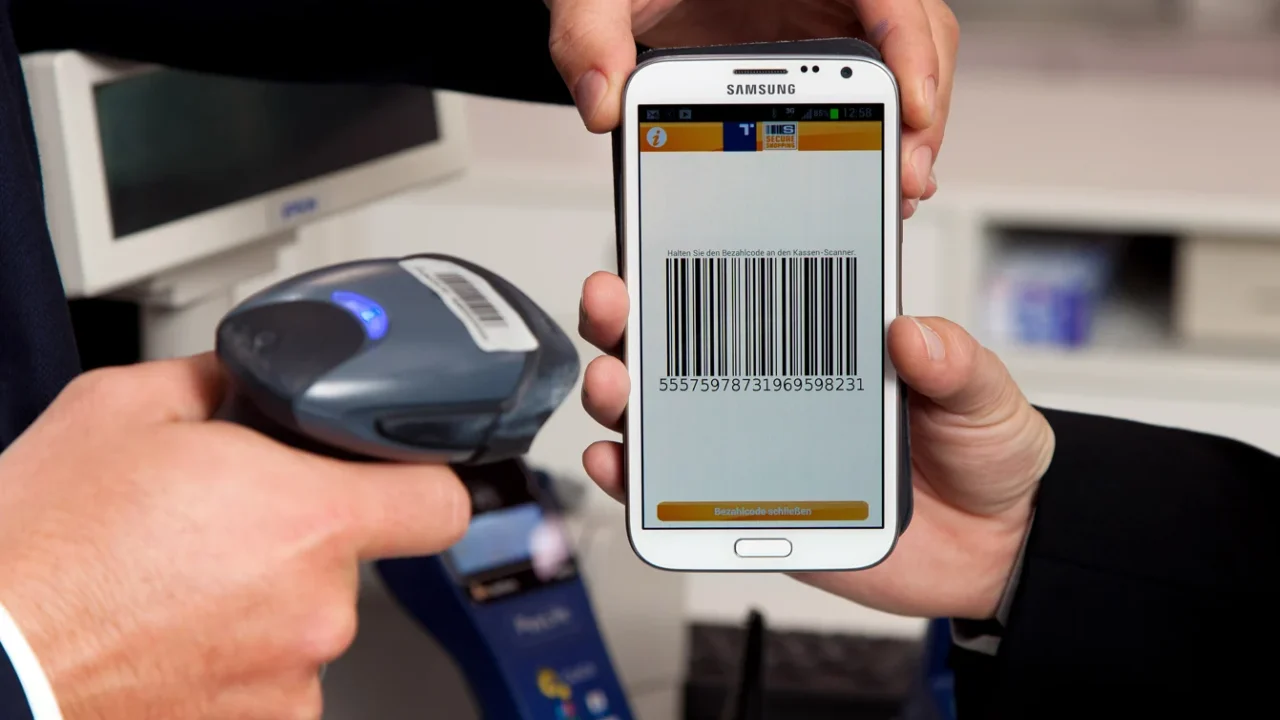
Photograph: File:Mobile Payment.jpg — Richard Tanzer Fotografie / VeroPay — CC BY-SA 3.0 (resized and converted to WebP).

Educational notice
This content is for educational and informational purposes. It does not constitute financial advice or an investment recommendation.