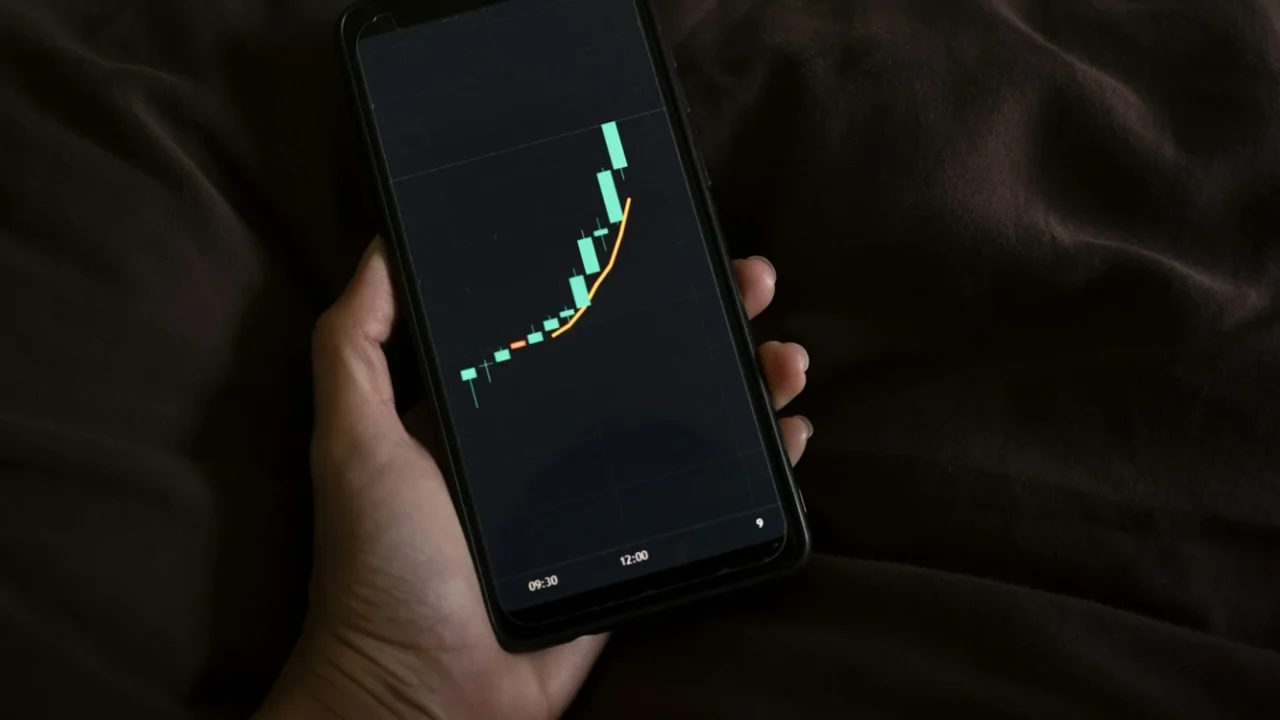
A digital coin that starts as a joke can end up moving millions in just a few days. This does not necessarily mean it has created a useful service: often it simply indicates that many people want to buy it at the same time. Memecoins are crypto-assets associated with memes, characters, or internet communities. Their main appeal may be cultural and speculative, not technological.
What really determines their value?
In the case of a company’s stock, we can analyse sales, margins, assets and liabilities. In the case of a memecoin with no revenue or rights over a business, the price depends mainly on the number of buyers and sellers in the market and the available liquidity. The token supply, concentration in a few wallets and the smart contract rules are also determinants. A very high price does not prove that large quantities can be sold at that price.
A community can give a symbol social value, but that does not guarantee financial value. A popular memecoin does not necessarily entitle its holder to dividends, redemption or a stake in a company.
Example: the price rises, but selling is difficult
Imagine a hypothetical token with one million units in circulation and a last trade at €2. Its apparent market capitalisation would be €2 million. But if the platform only has buy orders worth €20,000 near that price, a sale of €200,000 could drive the price sharply lower. Market capitalisation and liquidity are different.
In small markets, it can also be easier to manipulate the last traded price. A coordinated social media campaign can boost buying before early participants sell. Those who arrive later may be left with an asset that almost nobody wants to buy.
Five checks before trusting a figure
The first is the real supply in circulation, not just the theoretical maximum. The second is the distribution across wallets. The third is the trading volume and order book depth; it is not merely about looking at transactions from the last 24 hours. The fourth is whether there are permissions that allow modifying the token’s rules. The fifth is whether the service and issuer clearly explain their terms and limitations.
What does European regulation add?
MiCA establishes obligations for categories of crypto-assets and service providers, but it does not turn a volatile asset into a secure investment. Authorisation of a platform does not mean that any token traded on it is guaranteed. ESMA has warned of the effect of attributing to unregulated products the trust inspired by a regulated provider.
The key idea: a memecoin can have a real community without having economic foundations that justify its price. Understanding this separation is more useful than following a viral trend.
A useful check: what information is missing?
A promoter can publish a spectacular capitalisation figure and, instead, omit how the tokens are distributed. If 60% were controlled by three wallets—a completely hypothetical example—these individuals could greatly influence the market even if thousands of users participated in the networks. It is also important to distinguish between a personal wallet: a single entity can use many addresses.
To read a chart, compare price, volume and liquidity over the same period. High volume may correspond to repeated transactions, not necessarily to a permanent inflow of new depositors. If a project’s website promises fixed and immediate returns without explaining the source, it is an additional alert.
The final question is not «how many people are talking about it?», but «what real conditions would allow me to convert this digital value into money, and with what risks?».
The journey of a memecoin, from creation to first listing
Creating a token is not necessarily difficult from a technical point of view. On certain networks, an individual can use a standardised contract, set an initial supply and create a trading pair on a decentralised market. This explains why hundreds of projects with flashy names can appear without there being a company, a recognised team or a development plan behind them. The launch of a token and the launch of a viable economic product are different things.
Once the token has been created, promoters need visibility. The first purchases may come from their community, from people following a public figure, or from participants waiting to sell at a higher price. If the initial volume is small, just a few transactions can move the price significantly. Screenshots of spectacular returns can then circulate across social networks and attract new buyers. It is a self-perpetuating cycle driven by the perception that «everyone is making money», even though the screenshots do not show the losses of those who buy late.
The US SEC explicitly describes the use of memecoins in potential pump-and-dump schemes: actors who contribute to driving up the price through intense promotion and then sell their positions when demand from other participants arrives. Not all memecoins work this way, but the mechanism illustrates why community growth is not an independent proof of solvency.
A liquidity simulation: the on-screen price is not the selling price
Suppose a platform shows a memecoin at €0.50 and a person has bought 10,000 units. The screen attributes a balance of €5,000 to them. But imagine that buyers have only offered to buy 2,000 units at €0.49, the next 3,000 at €0.44, and the remaining 5,000 at €0.35. If the person sells all 10,000 units at the same time, they will receive, before fees:
| Hypothetical sale tier | Units | Unit price | Proceeds |
|---|---|---|---|
| First tier | 2,000 | 0.49 € | 980 € |
| Second tier | 3,000 | 0.44 € | 1,320 € |
| Third tier | 5,000 | 0.35 € | 1,750 € |
| Total | 10,000 | — | 4,050 € |
The difference of 950 € compared to the screen value is the effect of execution at different prices, without counting commissions or market changes while the operation is being processed. In less liquid markets it could be much higher. This made-up example also helps to understand why a large theoretical capitalisation does not mean there are enough funds for all holders to sell at once.
What do volume and follower figures hide?
When a project shows «millions of volume», one should ask in which market it has traded, over what period, and with which intermediaries. Volume is the sum of transactions, not an amount of money kept to protect investors. A single unit can be bought and sold many times during a day; this activity increases volume without necessarily creating a long-term base of savers.
Followers also require context. A social account can grow through advertising, humour, contests, or rewards, and a large community may consist of people who have no interest in using the currency. To assess the continuity of a project, verifiable public commitments, risks described clearly, and contract permissions are more revealing than isolated popularity metrics.
A risk map that is often confused
Market risk is that the price falls because demand decreases. Liquidity risk arises when there are no buyers at prices close to the quoted price. Custody risk is losing access to the portfolio or the provider who holds the assets experiencing an incident. Technological risk includes errors in the contract or poorly managed permissions. Finally, conduct risk appears when promotion omits important information or presents paid recommendations as independent.
It is necessary to distinguish between them because no single measure can solve all the problems. A technical audit can detect errors in a contract but cannot prevent the claim from disappearing. An authorised platform can offer certain operational guarantees, but it does not convert the token price into a promise of reimbursement. Prevention begins by not confusing these risks nor reducing them to a simple question about whether the project is «legal».
Three questions before sharing a recommendation
Before re-sharing a video about a memecoin, ask yourself who benefits if other people buy after watching it; whether the message also explains a scenario in which the price drops by 80%; and whether there is any verifiable utility beyond the hope of reselling. These questions do not allow predicting a price, but they help separate financial information from a fundraising campaign.
To consult the original warnings, it is particularly useful the alert from the Office of Investor Education of the SEC regarding cryptoasset scams: https://www.investor.gov/introduction-investing/general-resources/news-alerts/alerts-bulletins/investor-alerts/crypto-scams. The document explains, among other situations, the promotion of memecoins in artificial price pump schemes and subsequent selling.
Sources and complementary reading
- https://www.esma.europa.eu/document/warning-crypto-assets
- https://www.investor.gov/introduction-investing/general-resources/news-alerts/alerts-bulletins/investor-alerts/investor-alert-thinking-about-investing-latest-hot-stock-understand-significant-risks-short-term
- https://www.esma.europa.eu/press-news/esma-news/investors-should-consider-risks-unregulated-products-offered-regulated-crypto
Photograph: photo-1671459922221-be8beec5c9fa — Denise Chan — Llicència Unsplash (resized and converted to WebP).
Educational notice
This content is for educational and informational purposes. It does not constitute financial advice or an investment recommendation.