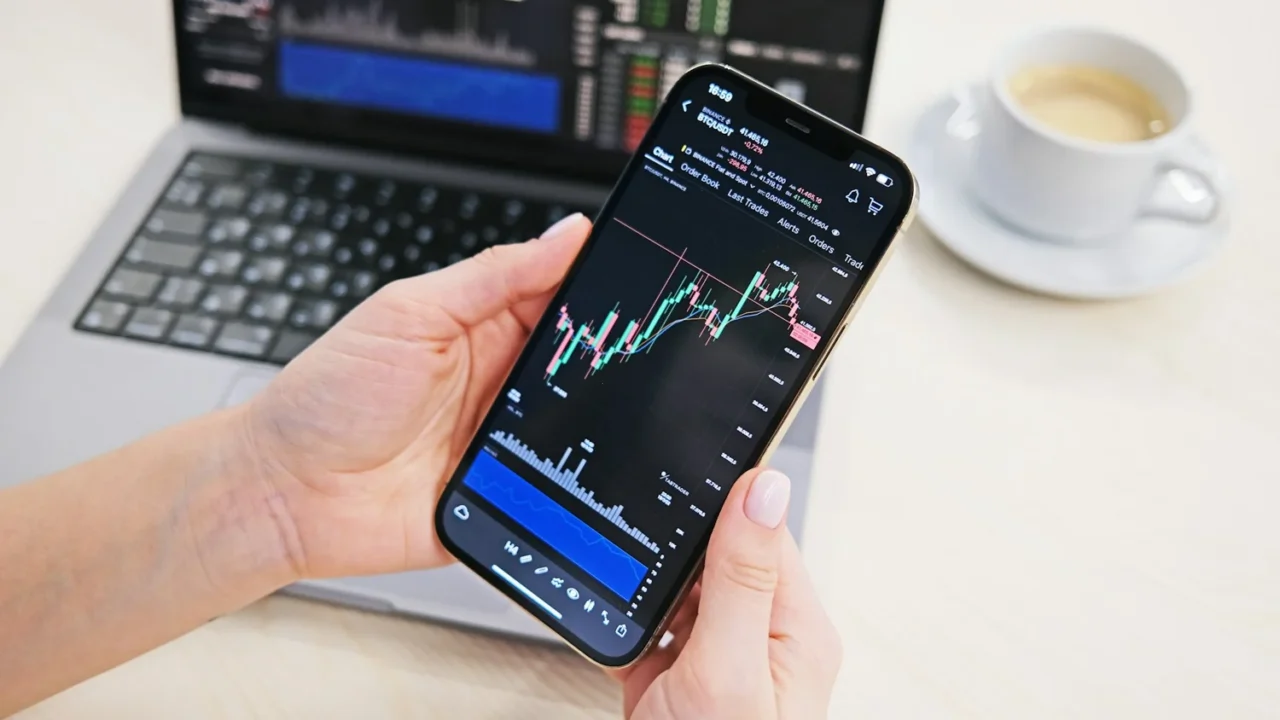
A crypto asset can multiply its price in a short time and, conversely, lose a very large part of its value. To understand these oscillations, one must look beyond memes and headlines: rises can combine genuine technological expectations with a self-reinforcing speculative dynamic.
From initial interest to euphoria
The sequence can begin with a novelty, such as a technical project or a new application. Some buyers see potential, the price rises, and attention increases. From this point on, people can be added who buy mainly because they do not want to miss out on the rise.
In markets with low liquidity, buy orders can move the price significantly. The availability of tools to operate with debt or leverage can amplify rises, but also forced liquidations when the price turns against the positions.
A numerical example of liquidations
A fictional operator contributes €1,000 of own capital to control a position of €5,000, that is, five times their capital. If the cryptocurrency drops by 10%, the position loses approximately €500 before commissions and costs. This equates to 50% of the contributed capital. On real platforms, margins, requirements, and liquidation mechanisms are more complex.
This example shows why price volatility can translate into much larger losses for some people. When many positions are liquidated simultaneously, selling pressure increases.
What distinguishes a bubble from a viable project?
A project can offer useful software or have an active community and still have an overvalued token. Interesting technology does not prove that each token captures a proportional share of the value it creates. Check what rights the asset represents, how supply is distributed and what drives long-term demand.
Also check whether trading volume is concentrated on a few platforms, whether there are restrictions on selling, and whether social media presents forecasts as verified facts.
What do regulators warn about?
ESMA has warned that cryptoassets can be subject to large price swings, low liquidity, misleading advertising, fraud and theft. EU regulation has developed, but it does not remove the risk of losing much or all of the money invested.
The key risk goes beyond volatility: low liquidity, viral expectations and leverage can amplify any change in sentiment.
The effect of new token emissions
Not every price increase means that demand is growing faster than supply. Some projects periodically release new tokens that were previously locked. If supply grows while the number of buyers does not, selling pressure can change. It is important to distinguish between circulating supply, maximum supply, and supply that could enter the market in the future.
A hypothetical comparison illustrates this: a token goes from €1 to €2 while the number in circulation grows from one million to three million. The market capitalization has not doubled, but has gone from €1 million to €6 million. However, this does not prove that six million euros in new money have entered the project: it is a valuation at the last traded price.
This nuance helps to detect viral charts that select a single figure to explain a story that is too simple.
Why can crypto bubbles advance so quickly?
The crypto asset market combines almost continuous trading, international participation, highly active communities on social networks, and, in some cases, low real liquidity. This combination can intensify volatility. When a token starts to rise, the movement can be visible immediately on thousands of screens; messages about extraordinary profits circulate without waiting for a regular trading session. The speed of access can encourage impulsive buying before risks are reviewed.
This does not mean that all crypto assets are identical. There are networks with technological development and concrete use cases, assets with defined emissions, and other projects with almost no product. However, even a project with real activity can have excessive valuation if buyers incorporate expectations far exceeding observable economic possibilities.
Leverage turns a small drop into a large loss
One of the factors that can accelerate declines is debt or leverage. Imagine a person who contributes €1,000 of capital and obtains a hypothetical exposure of €5,000 to a token through financing. If the price falls by 10%, the position loses €500, that is to say, half of the contributed capital, before interest, fees, and possible margin adjustments. If the fall is greater, the provider may demand additional collateral or liquidate the position according to contractual terms.
Forced liquidations can generate more sell orders, driving down the price and triggering new liquidations. It is a feedback mechanism that contributes to explaining why an asset that was rising strongly can fall suddenly. It is not a prediction about any specific token, but a description of how financing amplifies risks.
Available and future supply: the difference many overlook
The price displayed on the screen reflects transactions on the units that are actually traded, but there may be large quantities of tokens locked or yet to be issued. Some projects distribute allocations to early investors, development teams, or treasuries with release schedules. If a significant amount becomes tradable in a short time, the market must absorb potential additional sell-offs.
Imagine a token with 10 million tradable units at a price of €1. The circulating capitalisation would be €10 million. If other 20 million units are released over the coming months, there will be 30 million potentially available. It cannot be concluded that the price will necessarily fall, because demand could also grow, but any valuation that ignores this change in supply is incomplete.
A simulation of the euphoria leading to the correction
Suppose a fictional asset rises from €2 to €10, a 400% increase from the starting point. It then loses 60% from the peak and falls to €4. Despite the spectacular drop, it still trades 100% above the starting point. Whoever bought at €2 would have a very different result from whoever entered at €10.
If a person buys at €10 and wants to recover their capital after a drop to €4, the price needs to rise by 150% from €4 to return to €10. A 60% drop is not recovered with a 60% rise. This mathematical asymmetry is basic for interpreting risks and avoids the mistaken idea that «it has already fallen so much, so now it will rise».
When a community is real but the listing remains fragile
A community can build applications, generate information, and support the development of a network. This is real activity. But the utility of a protocol and the price of its token do not need to increase at the same rate: there may be no mechanism by which usage translates into benefits for all holders. Use, generated revenue, token economic rights, and secondary listing must be separated.
Sometimes campaigns highlight the number of registered users without clarifying how many are active, whether they pay for the service, or if they are multiple wallets from the same person. Metrics only add value when their definition and methodology are known. It is also important that internal transfers are not confused with payment adoption by consumers.
Editorial control against euphoric headlines
Before publishing that «a token has exploded», a responsible news piece should include the exact period of the movement, circulating capital, volume, liquidity conditions, and the risks of a correction. If possible, it should also explain future emissions and the degree of ownership concentration. This allows distinguishing between an informative news item and a promotional message.
ESMA has documented cycles of marked rises and falls in cryptocurrencies, and European supervisors have warned of volatility, reduced liquidity, and potentially misleading promotion: https://www.esma.europa.eu/press-news/esma-news/investors-should-consider-risks-unregulated-products-offered-regulated-crypto. These warnings do not eliminate the possibility of innovation, but require that its costs and limits be described with the same clarity as its opportunities.
Sources and complementary reading
- https://www.investor.gov/introduction-investing/general-resources/news-alerts/alerts-bulletins/investor-alerts/investor-alert-thinking-about-investing-latest-hot-stock-understand-significant-risks-short-term
- https://www.esma.europa.eu/document/warning-crypto-assets
Photograph: photo-1716279083559-ffc3a863c457 — TabTrader.com — Llicència Unsplash (resized and converted to WebP).
Educational notice
This content is for educational and informational purposes. It does not constitute financial advice or an investment recommendation.