We read that a company is “worth 500,000 million” and imagine it has that much money in the bank. In most stock market coverage, however, the figure is its market capitalisation: the price of one share multiplied by the number of shares outstanding. It is a snapshot of what the market values the equity at, rather than a cash balance.
The calculation is simple; interpreting it is harder
Suppose a fictional company has 40 million shares outstanding, each priced at €25. Its market capitalisation is €1,000 million. If the price falls to €20 tomorrow and the share count stays the same, its market capitalisation will fall to 800 million.
That does not mean 200 million has disappeared from the company’s bank account. Investors are trading their stakes at a lower price, so the combined market value of the shares has changed.
What happens when a company issues new shares?
If the same company raises capital by issuing shares, the share count used in the calculation changes. To compare market capitalisation across dates, looking at the share price alone is insufficient if the company has issued or repurchased shares or carried out other corporate actions.
Some companies have several share classes. To calculate their market capitalisation accurately, consider each relevant class rather than multiplying one share price by an arbitrary number of shares.
Market capitalisation and enterprise value
Analysts often distinguish market capitalisation from enterprise value (EV), a measure that takes account of items such as financial debt and cash, depending on the methodology used. Buying every share does not automatically wipe out a company’s obligations.
In a simplified example, suppose a company has a market capitalisation of 1,000 million, financial debt of 300 million and cash of 100 million. Its approximate EV would be 1,200 million. Before using the figure in a real valuation, check whether other material items need to be included.
Why might a small company be more expensive than it looks?
The number of employees, revenue and popularity do not directly determine market capitalisation. A company with modest profits and strong growth prospects can trade at demanding valuation multiples. Another with substantial assets and considerable risks may have a lower market capitalisation.
The US Securities and Exchange Commission’s Investor.gov glossary defines market capitalisation as the market price per share multiplied by the shares outstanding. That is a starting point for analysis.
Key point: market capitalisation values the shares at the latest market price. It tells you neither the price at which you could buy the entire company nor how much cash it holds.
A distinction worth making: free float
Not every share in a company is necessarily available to trade freely. Founders or controlling shareholders may hold some shares, and others may be subject to restrictions. Some indices and analysts therefore adjust market capitalisation for the free float, counting the shares available to the market according to specific rules.
Imagine a company with 100 million shares at €10 each. Its total market capitalisation is 1,000 million. If only 30% of those shares meet a hypothetical index’s free float criteria, its adjusted market capitalisation would be 300 million. The other 700 million has not disappeared; the two figures measure different things.
A meaningful comparison should specify whether it uses total market capitalisation, free-float-adjusted market capitalisation or enterprise value.
What does multiplying the price by the share count really tell us?
Market capitalisation looks like an objective figure: the share price multiplied by the number of shares outstanding. But setting a market price does not require trading every share every day. The price comes from individual trades between buyers and sellers. It is then applied to all shares to estimate market capitalisation.
Imagine a company with 50 million shares at €12. Its market capitalisation is €600 million. If the latest trade lifts the price to €13, the figure rises to 650 million. That does not put 50 million euros into the company’s bank account. Nor does it mean every shareholder could sell at €13 at the same time. The calculation produces a market valuation.
Equity value and the value of the whole business
Shareholders own the company’s equity, but the business may also have been financed with loans and other obligations. To compare companies, analysts often use enterprise value. In its simplified form:
EV ≈ market capitalisation + financial debt − available cash
The calculation may need further adjustments, such as for minority interests, preferred shares or other items. It is a conceptual tool and does not replace examination of the financial statements.
| Fictional company | Market capitalisation | Financial debt | Cash | Simplified EV |
|---|---|---|---|---|
| A | €600m | €300m | €50m | €850m |
| B | €700m | €30m | €250m | €480m |
Although B has a higher market capitalisation than A, its simplified EV is lower in this example. The figures displayed next to company names on a trading platform do not, on their own, tell you which company is more expensive.
What happens during buybacks or share issues?
The share count changes over time. Issuing new shares can increase the total and dilute existing shareholders’ ownership percentages. A buyback followed by cancellation can reduce the number of outstanding shares. At a constant price, either change would affect the calculated market capitalisation. In practice, the price can also react to new information.
If company A, which has 50 million shares, issues 5 million new shares at €12, it raises 60 million before costs. At that price its market capitalisation would go from 600 to 660 million euros, while existing shareholders would own a smaller proportion of the company. To assess the transaction, you also need to know what the company plans to do with the money.
Does market capitalisation tell you whether a share is cheap?
No. A share that trades at €2 is not necessarily cheaper than one that trades at €200. You need to know how many shares there are and what each one represents. A company with one billion shares at €2 would have a market capitalisation of 2,000 million; a company with one million shares at €200 would have a market capitalisation of 200 million. The price of one share says little about the scale of the business or its potential returns.
It is also useful to distinguish size from a demanding valuation. A large company can trade at modest multiples of its profits, while a small company can trade at a high price relative to its revenue. This is why analysts also examine earnings, cash flow, debt and growth prospects.
Why headlines about millions being lost can mislead
When the press says that a company “lost 20,000 million in value in a day”, it often means that its market capitalisation fell by that amount. It does not imply that an equivalent amount of cash left the company. Share prices can respond to expectations, interest rates and new information. The fall can matter greatly to shareholders, but the headline should specify what changed.
The Spanish securities regulator’s glossary defines market capitalisation as the number of shares multiplied by their quoted price. A fuller analysis also takes account of liabilities and the company’s ability to generate future cash flows.
Sources and further reading
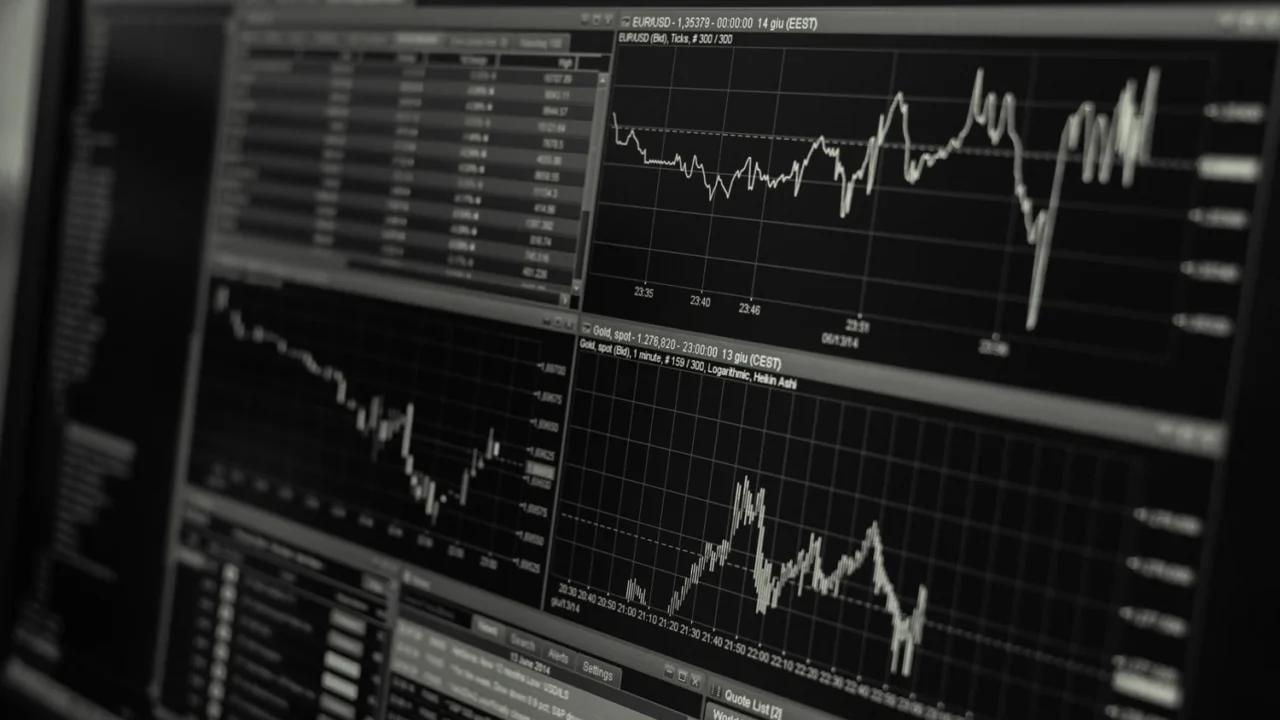
Photograph: File:Stock market charts illustration.jpg — Autoria no identificada (PxHere, fitxer 1170475) — CC0 1.0 (resized and converted to WebP).

Educational notice
This content is for educational and informational purposes. It does not constitute financial advice or an investment recommendation.